18 February 2008

S is for Spiderman

S for spiderman

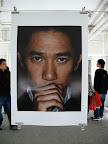
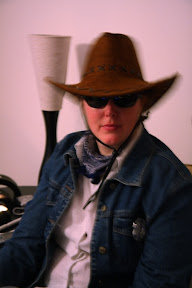
S is also for Superman, Spiderwoman, Santa Claus, Skeleton Gal, Sleepyheads, Miss Sheriff, Miss Splendid and Miss Siberian!

___

___

___

15 February 2008

Of welfare, systems and the intrinsic goodness of mankind

»This article reminds me of the terribly heated argument I had with Mr C a few months ago, and I wonder if it may help to explain why our viewpoints are so divergent and polar. Out of the blue from 1 to 3 am, we started discussing, then arguing about welfare vs self-help, unemployment benefits vs rainy-day savings, luck vs hard work, high tax vs modest safety nets, and more generally, capitalism vs socialism. I remember a fitful night of sleep with all these big social concepts floating in and out of my brain, with the last remnants of the duel continuing into the next day and ending abruptly with a "do not tell me I know nothing about drug problems because my college best friend was a victim of drugs and to this day, I don't know whether she is dead or alive."

Being a disciple of behavioural economics and being from Singapore where "welfare state" is a taboo word (but as I tried to explain to Mr C for 20 minutes, we do have a welfare system), I am a firm believer that human behaviour is shaped by incentive. Therefore, social systems must be designed such that they do not contain incentives for people to cheat. For instance, I am pro-rainy-day-savings and anti-unemployment-benefits: the latter contains incentives for people to be slack about finding work. On this, Mr C attacked me for for the bourgeois assumption that people have money left over for savings. Many lower-middle class people need to count their pennies before ordering a pizza in the last few days of a month, he said. To which I countered, then there must be an underlying problem somewhere else if this is happening. If it is an alcohol abuse or depression problem in the family, there should be social support for that. If it is high rent or too-low wages, we must tackle that bigger economic problem instead. In short, I believe governments should help those in need but I also believe we cannot just hand out cash to support alcohol habits or laziness.

I remember to this day how this part of the argument ended - with a barbed chastise from Mr C:

"You are really blind to the whole problem here. You are successful, you have a good job and you assume that everyone can have it too. But sometimes, it is not about effort. It is about luck."

I couldn't respond during the moment, partly because I was still reeling from the sting of the barbs, partly because I also agree with the last statement - that luck often counts more than effort, and indeed I have been lucky in life. Yet, that is a separate issue from the fact a system cannot systemize incentives to cheat, and I could not see why Mr C could not see that.

In the following weeks when I pondered this on and off, it became clearer to me why.

Fundamentally, my beliefs had two premises: (1) most of mankind is ruled by an intrinsic profit (i.e. self-interest) motive ; and (2) the welfare system is able to correctly identify those in need. Mr C's premises are the exact opposite: he believes that cheaters are the minority and he would rather have a system that gave welfare checks so that no one will die from cold or starvation, even if it meant a few people cheating. I, on the other hand, think that cheaters are in the majority and will cause the bankruptcy of the system. We could both be right though - maybe those people he has seen in Europe are intrinsically nice / altruistic / non-cheating, whereas those I have seen in this part of the world are not.

Soon after, »a NYT article about a welfare recipient who starved to death in Japan made me re-think my position on (2) and see Mr C's point. Systems fail. The question is that when they fail, which side do we want to err on?

And the bigger question is: during the times that they do not fail, what is the cost of the cheaters (summated over time) that we are willing to put up with? This, unfortunately, is a dynamic* equilibrium model which is sadly impossible for a half-baked economist like me to solve.


*Because cheaters will increase over time when non-cheaters see cheaters succeed.

If I didn't have to worry, I'd be studying languages and anthropology

via »AWAD newsletter #291

Here in Japan, the light does not turn "green", it turns "blue"!

The Japanese word for green is "midori" (yes, of liqueur fame), and the word for blue is "ao", however, as I understand it (though I am no lexicographic historian), midori is a much younger word than ao. For reasons few seem able to articulate, Japanese historically had a somewhat limited verbal palette for the infinite variety of colors, though it is augmented by such natural constructions as "ha-iro" for "ash-color" (gray) or "mizu-iro" for the blue color of water.

Traffic signals are the same color as in the U.S. (a blue-green), but are universally referred to here as "ao-shingo" (blue light) (nothing to do with K-mart).

It's not just that they choose to label one ambiguous color as being on the other side of the line; "ao" simply has a broader meaning. Green tree frogs are "ao-gaeru", and one's youth may be referred to as "seishun" (blue spring).

I could go on about the colors of tea and others, but that's enough for now.

Also see: http://en.wikipedia.org/wiki/Distinguishing_blue_from_green_in_language


When I was learning Japanese, I did notice that the kanji for blue 青い is green, but didn't think about it after that since it caused me no confusion at all. Maybe it is not confusing because we have the same blue-green conflation of the word in the Chinese language as well.

05 February 2008

The cab business in Japan

Via »Japan Inc Newsletter, 30 Jan 2008

In 2001, getting into a Tokyo taxi for the first time, I remember being surprised by a number of things. The door opened before I could get a hand to it, the driver was wearing white gloves, puffing a cigarette, and when I got in, he didn't seem to have a clue where the Japanese address that I handed to him was. After a short interchange on the radio, with who I assume to have been HQ, he said 'OK' and drove me off to my destination leaving me generally rather impressed with the cleanliness and politeness of the experience.


Since that time, taking taxis in Japan has become a part of life that I spend little time dwelling on. However, there are some interesting facets to the business and culture of taking cabs here that have changed significantly in recent years. The most recent change is of course the smoking ban that has been imposed on most cabs in Tokyo this month. The two main taxi associations, The Tokyo Taxi Association and the Tokyo Kojin Taxi Association have implemented a ban covering 52,000 taxis out of the reported total of 53,619 cabs. The ban has not been extended nationally yet but will most probably be complete by the autumn. A breakthrough for the anti-smoking lobbyists, like all such regulation, the ban will rile smoking drivers and passengers and be met with applause by their non-smoking counterparts.

One thing is for sure, the trademark cigarette for cab drivers will rapidly become a thing of the past. However, while this might be referred to as 'regulation' the industry at large has been locked into a trend of deregulation for over 10 years. Before then, since the 1970s, the industry had faced major restrictions that in part resulted from the sudden surge in demand for cabs during the period of economic consolidation in the 1960s. The government was so concerned by issues such as taxis refusing customers for short distance trips that it brought in the Emergency Measures Law for Optimization of Taxi Services, in 1970.

Together with the existing 1951 Road Transport Law, this gave the government almost absolute control of fare prices, the number of taxis on the road, licenses granted, operating hours and allocated patches.


During the 1990s however, reformers came into power and started to deregulate across a specturm of sectors. A paper from the Kyoto Institute of Economic Research argues that the first manifestation of deregulation in the taxi industry occurred in July 1993 which allowed for a dual price structure in Osaka allowing most cabs to start from 600 yen but some from 540.

By the turn of the century, excessive demand had turned to an excess of supply; worried that the restrictions might fuel less than savory modes of competition, and also as Diet reformers initiated a more thorough general program of deregulation, the Road Transport Law was reformed in 2002 making it much easier for new firms to enter the market.


Taking advantage of the new legislation, many operators set up fleets and the number of taxis on the roads increased dramatically. Firms such as MK Taxi, kept their prices low and managed to grow their business substantially. Liberalization thus created more jobs and introduced more competition into the industry. However, much to the confusion of economists, the government's release of control over supply and demand has not exactly gone as planned. Firstly, although the supply levels have risen, demand has actually gone down. This has led to deteriorating conditions and pay decreases for drivers and apparently there has been a downturn in the level of service.

As a recent paper by Walter Skok and Sakoto Kobayashi (in Knowledge and Process Management) observes, the reforms were intended to 'improve service quality as a result of increased competition. However, the resulting situation is the opposite to that expected.' They continue: 'Although the number of cabs has steadily increased, the demand has correspondingly decreased. This paradoxical situation may be explained by the damaging effects of the recession that had an adverse impact on personal spending power.'


Others argue that it was also the result of 'excessive competition' in the industry as a consequence of deregulation. This explanation is possible but ignores the nature of the problems that regulation caused in the first place; attempts to control supply and demand can be futile in the face of oscillating consumer spending power and discourages sorely needed entrepreneurialism. But it is also arguable that the liberalization has not really gone far enough. In particular,prices are still controlled by the government and taxi companies had to fight hard for the right to rise to 710 yen in Tokyo, effective from last month. If the government allowed companies to control pricing, this would give firms more freedom to carve out budget or luxury niches. On the other hand, when it comes to prices, passengers tend to go for the first cab to stop rather than look out for the cheapest one. Companies such as Nihon Kotsu, one of the big three companies has got around this by introducing taxi ordering services that respond to one ring of a mobile phone.


The recent fare hike has had a mixed reaction and arguably favors the bigger companies. The Nikkei reported that the fare rise was driving customers away. This can put the squeeze on the smaller operators and it has been the case that the larger
companies have been acquiring increased numbers of their smaller competitors in the last few years. Smaller operators are the least likely to be able to keep fares low and even if they do, their fleets are too small to derive major benefit from this. Last July, Nihon Kotsu bought its smaller rival Toyo Kotsu, and lower down the food chain, several midsized firms have bought out smaller ones. In terms of labor too, big companies find it easier to get staff and therefore keep expanding - another
industry paradox is that despite a falling wage, demand for drivers has gone up with the increasing number of operations.

Perhaps further deregulation would allow for more independent operators and smaller companies who could sustain their business by providing a more tailored, targeted service-once the playing field is more level.

30 January 2008

This snow is not getting too fun anymore

completely sold-out train tickets
Okay, this snow is not getting too fun anymore. The transport system in China is near paralysis and I am not sure if my flight tonight will fly. Fingers crossed.

28 January 2008

Desaturated playground

desaturated playground
Except I didn't desaturate it. I left the metering on as spot metering by mistake and couldn't have asked for a nicer effect.

20 January 2008

Reminiscences of good old US days

Featured this weekend in my favourite NYT.

Keep warm with a meal at Fireplace restaurant, in the aisles of a university bookstore and hot chocolate on Harvard Square.


Without violating the city’s code of stoicism, one can find the ideal winter day in the Second City by alternating outdoor grit with a smattering of permitted hideaways.


Winter Day Out in Seattle

Drink coffee. Put on another layer of dry clothes. Repeat. This is the formula to warm inside and out in this city.


16 January 2008

Elegance

Elegance is when Skype knows how to pause iTunes when you start making a call.

And when it is done, fades the music back in.


P.S. The radio station »Deezer does this too.
(And is one up Skype for its spotless streaming, even in erratic Chinese broadband connections).

15 January 2008

Little fur balls

little fur balls
These are the little fur balls I used to pluck from pussy willows as a kid.
They look like almost like little mice here...
Happy year of the mouse.

12 January 2008

Pussy willows

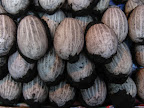
pussy willows
When I was a little kid, I used to pluck these furry buds off the pussy willows during Chinese New Year and keep them in my pocket. So that every time I put my hands into my pockets, I would get a nice furry feeling and smile to myself.

Needless to say, laundry time was a disaster for my mum because she would be pulling out these pocketfuls of little fur balls...

As I grew older, we somehow stopped buying pussy willows at home. My mum says that it is because they breed mosquitoes (how they breed more mosquitoes than any other vase of flowers I don't understand), so maybe she just got tired of washing pocketfuls of fur balls.

Now that I have my own home and some spare cash, I plan on stuffing my whole pocket full of fur balls. In fact, I think I will buy an extra stalk tomorrow just to pluck fur balls off them.

Bedtime with Proust

10 January 2008

Old-time Chinese brands get ordinary English names

去年8月份,北京启动了“迎奥运—传神诠释老字号”公益翻译活动,北京地区50余家老字号通过互联网,向全世界征集“洋名”;收到全球25万多名翻译志愿者提交的翻译作品25万余份,其中来自海外的翻译作品约占总数的20%,主要集中在华人聚集较多的加拿大、美国及东南亚等地区。

经过初评和复评的严格筛选,由北京外国语大学高级翻译学院院长王立弟、中科院翻译工作者协会副会长李亚舒、民俗学家赵书等翻译专家及民俗专家组成终评组委会,对参赛作品进行评审、讨论和修改,最终给6家老字号取了新“洋名”。

主办方表示,除首批公布的六家老字号企业外,数十家的老字号企业还需要全球的志愿者提交优秀的翻译作品。活动组委会日前已正式宣布启动活动第二季。市民可点击www.transn.com查询或提交作品。

  洋名对照

  全聚德 Quanjude Peking Roast Duck-Since 1864
  吴裕泰 Wuyutai Tea Shop-Since 1887
  同仁堂 Tongrentang Chinese Medicine-Since 1669
  瑞蚨祥 Ruifuxiang Silk-Since 1862
  荣宝斋 Rongbaozhai Art Gallery-Since 1672
  王致和 Wangzhihe Gourmet Food- Since 1669


I am a bit of a translation snob and was disappointed to read that despite all the worldwide entries and big-name university professors, all the translations came out quite unimpressive indeed. The "since xxx year" is quite nice, but name-wise, at least call it "Wuyutai Tea House" instead of "Tea Shop", "Tongrentang Chinese Medical Hall" instead of plain vanilla "Chinese Medicine", and then try translate the very poetic and literary "斋" into something other than "gallery". ("Gourmet Food" sounds wrong, but since I don't know "王致和" and the nature of the store, I can't comment further.)

There are quite a few well-done translations of brand names here and one of the best I have seen is that for the American stationery company Home Depot which is next door to our office. It was translated as "家得宝“ which achieved the effect of 译音又译义 (translating both the sound and the meaning)。Apparently the story goes that they spent money asking a translation company to do translate but were unsatisfied by the results. Then they happened to mention to a boss in our firm over lunch and he came up with the current one. Voila.

Post-script: I agree more whole-heartedly with the translation of Chinese dishes such as »this, though I think Kungpao Chicken should remain Kungpao Chicken... Most people who eat Chinese takeout overseas would know this.

09 January 2008

Macau - A Charm Beyond the Jackpot

In Hong Kong, Nice Things Come in Pairs

___

___

___

___

___

More pictures »here.

Word of the Day - Sheep's Eyes

sheep's eyes (sheepz eyez) noun

Shy amorous glances.

[The origin of the term is uncertain. Various theories attribute the term to Gaelic or any of the various Germanic languages. It has also been suggested that the term refers to the docile appearance of a sheep's eyes.]

"When office temp Carolina Santos developed a crush on a man at the Brazilian oil company where she was working, she did rather more than merely make sheep's eyes at him."
- David Randall; Fatal Attraction; The Independent on Sunday (London, UK); Jan 29, 2006.

lol! That was my decade-long »AWAD mailing list today.


Post-script: According to an Italian reader who responded to the mailing list, the analogous Italian term for this is "occhi di triglia" = mullet's eyes.

09 December 2007

The Height Tax

Should we tax tall workers at a higher rate than their shorter peers? The answer — yes — “follows inexorably” from reigning academic theories of taxation, argues Greg Mankiw, an economics professor at Harvard (and former chairman of President George W. Bush’s Council of Economic Advisers), in a working paper first circulated in April. »More...

Of course I say: 强词夺理. Even if it is my favourite NYT.

02 December 2007

Wounds of the Revolution

Wounds of the Revolution - New York Times
The Cultural Revolution swept away much of the old Chinese culture. Dignity is now defined by money and French and Italian luxury goods.


Well-put. I alluded to this phenomenon previously in »this post.

01 December 2007

9 Days in the Kingdom by 55 Great Photographers

Saw a very nice photography exhibition in Bangkok in honour of the King's 80th birthday (a really big thing there):

Bangkok photo exhibition

It was partly sponsored by Canon and at the exit, there was a fun sign which said:

Thank you for coming to the exhibition.
And now you have to buy a camera!

Loving Bangkok (and not for the shopping)

This time, I really like Bangkok. Apart from a familiarity which allowed a leisurely revisiting of places without maps (a la Paris), it was also helped by a conscious choice to abandon the monolithic and fanatical Asian take to Bangkok (i.e. shopping) and instead focus on a different interpretation of the city.

It was an infinitely more superior experience (even as it was predominantly a solitary one since most people are not interested in this experiment). A cocktail on the the sky-high, open-air bar of Banyan Tree was a real treat after a day of inane corporate-speak, as was the extremely value-for-money pasta at Zanotti and SUPERB Thai food at Baan Khanita. Instead of shuffling straight to Siam square blindly, I noticed how I could stroll out of a Coach store and two seconds later, be prostrating in front of the harmoniously co-existing Erawan shrine.

Then there are the polite and gentle ways of the Thais, the cars that don't assassinate you on the streets, the perfectly tropical weather which was neither humid nor to the point of perspiration, and most of all, the night scenes of working class Thailand that rivals Shanghai's and makes me want to buy a dSLR straight away. (I am getting very impatient at how crappy my Canon Powershot is with night shots.)

Absence often makes me forget, but Southeast Asia is gorgeous.


Post-script: Alright, I'll admit that I don't dig the new Bangkok airport much. I feel like I should like the minimalist steel and concrete structure, but the truth is that I don't. Did anyone also mention to the architects that metal chairs are an extremely bad idea in (cold) airports? I thought I could get some shut-eye while my flight was delayed, but it was just impossible to fall asleep even though I was lying flat across three chairs - they were sucking heat from me like vampires. So at a glorious 1 am, I had to go on a grumpy hunt of non-metal chairs in the airport. I finally found a cushioned backseat of a parked golf buggy to curl up in the end.

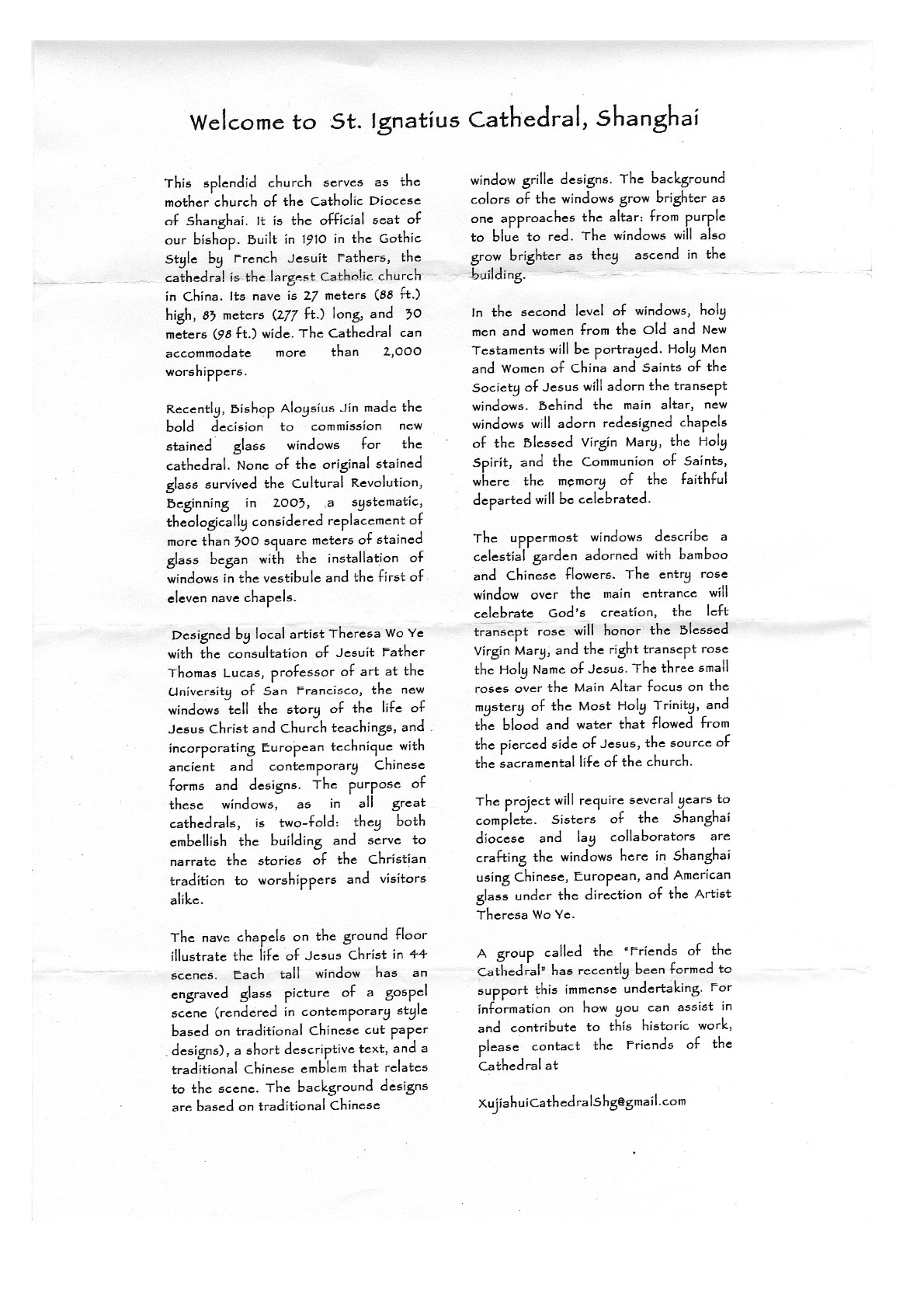
St Ignatius Loyola Cathedral of Xujiahui

Courtesy of the Shanghai Heritage group, I managed to get a preview of the gorgeous stained glass that were newly installed in the »St Ignatius Loyola Cathedral of Xujiahui. The original ones had been blown out during the Cultural Revolution:

stained glass and shadowsMore pictures »here.

20 November 2007

Float by Design Mobel


Float by Design Mobel, designed by David Trubridge


My idea of sleeping. Bonne nuit.

19 November 2007

5 Gorgeous Pens for 5 Nobel Prize Winning Writers

via Cool Hunting by Phuong-Cac Nguyen on 11/18/07

[Very appropriate, given that I was recently reunited with my long, long-lost fountain pen again...]

CletoMunari.jpg

A person's handwriting says a lot about his or her personality; a strong right slant suggests a fierce emotional side while small size might refer to a penchant for details. This idea wasn't lost on Italian designer Cleto Munari, who asked famous architects and designers to come up with with a set of five beautiful pens, each inspired by a Nobel Prize-winning writer. The finished writing utensils with 18kt gold details are luxurious and inspiring to those who take the handwritten word seriously.

To start, Munari asked for handwritten letters from writers Nagib Mahfouz, Toni Morrison, Wole Soyinka, José Saramago and Saul Bellow, which he then gave to architects and designers Toyo Ito, Alessandro Mendini, Alvaro Siza Viera and Oscar Tusquetstook. The pens are very much based on the designer's interpretation of the writer's style and form.

Designboom has excerpts from the pens' accompanying The Book of Five Pens that show these letters, essential elements for potential purchasers wanting to first connect with a pen before they buy it.

The pens, available in roller or fountain form, start from $550 from Art Brown. At that price, you won't be apt to loan it out without forgetting to ask for it back.

Sent via Google Reader

10 November 2007

Silent films and their live music

A delightful first time with live music accompanying silent films. This was the Blue Grassy Knoll at my favourite bar, playing their original compositions for Buster Keaton and a 1922 Chinese silent film, Labourer's Love. The best part for me was hearing the simulated sounds of shuffling mahjong tiles. Nice!

Wall Street analysis of a woman seeking $500k+ earning man

Update: This and other great Craigslist ads are discussed in a »recent NYT article.

A hilarious dose of »Tim Hartford-ish humor in a Craiglist post - courtesy of a friend:

Woman seeking $500k+ earning man - advice

What am I doing wrong?

Okay, I’m tired of beating around the bush. I’m a beautiful (spectacularly beautiful) 25 year old girl. I’m articulate and classy. I’m not from New York. I’m looking to get married to a guy who makes at least half a million a year. I know how that sounds, but keep in mind that a million a year is middle class in New York City, so I don’t think I’m overreaching at all.

Are there any guys who make 500K or more on this board? Any wives? Could you send me some tips? I dated a business man who makes average around 200 - 250. But that’s where I seem to hit a roadblock. 250,000 won’t get me to central park west. I know a woman in my yoga class who was married to an investment banker and lives in Tribeca, and she’s not as pretty as I am, nor is she a great genius. So what is she doing right? How do I get to her level?

Here are my questions specifically:

- Where do you single rich men hang out? Give me specifics - bars, restaurants, gyms

-What are you looking for in a mate? Be honest guys, you won’t hurt my feelings

-Is there an age range I should be targeting (I’m 25)?

- Why are some of the women living lavish lifestyles on the upper east side so plain? I’ve seen really ‘plain jane’ boring types who have nothing to offer married to incredibly wealthy guys. I’ve seen drop dead gorgeous girls in singles bars in the east village. What’s the story there?

- Jobs I should look out for? Everyone knows - lawyer, investment banker, doctor. How much do those guys really make? And where do they hang out? Where do the hedge fund guys hang out?

- How you decide marriage vs. just a girlfriend? I am looking for MARRIAGE ONLY

Please hold your insults - I’m putting myself out there in an honest way. Most beautiful women are superficial; at least I’m being up front about it. I wouldn’t be searching for these kind of guys if I wasn’t able to match them - in looks, culture, sophistication, and keeping a nice home and hearth.

Reply 1:

I read your posting with great interest and have thought meaningfully about your dilemma. I offer the following analysis of your predicament. Firstly, I’m not wasting your time, I qualify as a guy who fits your bill; that is I make more than $500K per year. That said here’s how I see it.

Your offer, from the prospective of a guy like me, is plain and simple a crappy business deal. Here’s why. Cutting through all the B.S., what you suggest is a simple trade: you bring your looks to the party and I bring my money. Fine, simple. But here’s the rub, your looks will fade and my money will likely continue into perpetuity…in fact, it is very likely that my income increases but it is an absolute certainty that you won’t be getting any more beautiful!


So, in economic terms you are a depreciating asset and I am an earning asset. Not only are you a depreciating asset, your depreciation accelerates! Let me explain, you’re 25 now and will likely stay pretty hot for the next 5 years, but less so each year. Then the fade begins in earnest. By 35 stick a fork in you!

So in Wall Street terms, we would call you a trading position, not a buy and hold…hence the rub…marriage. It doesn’t make good business sense to “buy you” (which is what you’re asking) so I’d rather lease. In case you think I’m being cruel, I would say the following. If my money were to go away, so would you, so when your beauty fades I need an out. It’s as simple as that. So a deal that makes sense is dating, not marriage.

Separately, I was taught early in my career about efficient markets. So, I wonder why a girl as “articulate, classy and spectacularly beautiful” as you has been unable to find your sugar daddy. I find it hard to believe that if you are as gorgeous as you say you are that the $500K hasn’t found you, if not only for a tryout.

By the way, you could always find a way to make your own money and then we wouldn’t need to have this difficult conversation.

With all that said, I must say you’re going about it the right way. Classic “pump and dump.” I hope this is helpful, and if you want to enter into some sort of lease, let me know.

So there you have it. Beauty is a depreciating asset, good thing I don’t have much of that ;)


Reply 2:

Your also came across your posting with great interest. I am a 28 year old Wall Street trader who qualifies as an eligible suitor under your $500k/yr rule. In fact, I make over a million and can usher a woman into a comfortable, true middle class lifestyle (not like those 500k lower-middle class chumps who have to make do with the junior two-bedroom).

I am sympathetic to your goal in finding a rich man to marry. The milk needs to be sold by the expiration date. But since this is premium milk, why would you settle for less than premium prices? I would like to address some of the questions that were previously missed by the other gentleman and provide constructive advice on where to find your match.

I also do believe in the efficient market theory, and am surprised that $500k hasn’t found you yet. There are plenty of rich lawyers, investment bankers and hedgies to go around in this city. What gives? I think the problem might be that you have not been sufficiently focused in your search efforts.

The culprit, I believe, may be that you are also looking for qualities aside from money - such as looks, personality, and a sense of humor. However, men who have those qualities learn at an early age that they do not need money to attract quality women. As the saying goes, if you can get the milk for free, why pay up for the cow?

What you need to look for is someone who is long money, and short the other aspects. They are not easy to spot, since you are biologically wired to overlook and ignore them. However, the next time that you are at a expensive black tie event, and you are introduced to the short, bald, overweight man who fidgets nervously whilst making conversation with you, pay special attention to him.

Here’s an inspirational story for you. An acquaintance of mine who was also an classy and articulate woman as yourself was able to land that guy - who also happens to be one of the top ten guys at Google. This is the type of stuff that gold-digging moms read to their gold-digging daughters at bedtime. Perhaps you need to make a location change to Silicon Valley - miracles like these happen almost everyday in a land where you can randomly throw a rock and hit a rich nerd squarely in his Kim-jong Il glasses.

And as far as his deficiencies go, they turned out to be not so bad. With hundreds of millions in the bank, she’s been able to clean him up and give him a little sophistication. Think of it as a fixer-upper project with a massive budget (and yourself as a visionary real estate developer!). Although, I must warn you, it is a fine line you are flirting with - you must not overdo it lest he begins to attract younger women who are hotter than yourself. The trick is, you need build him up enough to be presentable, while simultaneously manipulate him into believing you are the best that he will ever do! That and having kids will be your insurance against your depreciation (or as I prefer to use the term, milk going sour).

I wish the best of luck on your sales project. As for me, I am also available for a short-term lease. However, for marriage I wouldn’t consider a woman unless she can bring beauty, brains and self-motivation to the table. I do not want to dilute my gene pool and end up raising a bunch of Paris Hiltons.

07 November 2007

Yahoo vs Baidu

Fun ad of Yahoo taking a jibe at Baidu:


English: "If you can search only 100 degrees [Baidu literally means 100 degrees], you might as well search 360 degrees with Yahoo."

But Yahoo probably didn't realize the etymology of Baidu's name, which comes from »众里寻她千百度. So Baidu is not just 100 degrees, but (at least) 1000 degrees.

As my elementary teacher used to say, it's good to do homework.

04 November 2007

The Pei connection

SUZHOU - Five years ago, during a break from tango class, Y had asked me what I would like from Paris. After a moment of thought, I said I wanted a postcard of the Louvre pyramids. At that time, I knew very little about I.M. Pei, only that he designed the Louvre pyramids (which invoked a greater desire in me to visit Paris than the Eiffel Tower*) as well as the Kennedy Museum that I was going to see a few days later in Boston. A photo I had taken at the Kennedy Museum later made it into the first issue of our grad student magazine, so that augured well for the start of a Pei connection.**


Rejuvenated from seeing the pyramids again last month, still so breathtaking even though it was my third time, I finally took the long-procrastinated trip to Pei's museum in Suzhou this weekend.

It was most brilliant use of gray I have ever seen. Single-handedly, it connects the antiquity of Suzhou and the modernity of Pei.

Next time I will pack a picnic and spend the day just looking at the gorgeous shadows.

______


____


*I had initially thought of posting a picture of the pyramids, so I poked around my photos for a street-level overview of them. I could not find a single one from all my trips to Paris. I must have concluded that it was much better to enjoy a private moment with the pyramids, than to have a menage-a-trois with hundreds of tourists.

**After coming back from Suzhou, I was delightfully surprised to know that Pei also did my favourite shopping mall and office of three years in Singapore - Raffles City. In fact, the connection can even be traced back further - it used to be my mum's office 20 years ago as well. I should have guessed from his motif of skylight, so classically and effectively used in both Raffles City and the Suzhou Museum.

25 October 2007

Chinese are subtle creatures

It was an exhilarating evening. A well-loved Chinese colleague was moving on to our Beijing office, and everyone that mattered agreed to come to his farewell dinner. despite the short notice. I picked a steamboat place for greater interaction. It paid off - it is difficult to remain distant when everyone is tackling hairy crabs with bare hands and suckling prawn curry off their fingers.

The colleague was a true northerner. He toasted every single one of us with a full glass of beer each and then quietly paid the big bill on the pretext of going to the bathroom. More toasts should have happened for an occasion like this, but our predominantly southern team was generally an alcohol-intolerant one and a married-with-kids one at that. While I was a better-than-average drinker, the context was not appropriate for me - a woman - to make alcoholic advances, even extremely platonic ones, to a man. In any case, our team was already much more chatty and relaxed than any other team dinners I had ever been (which were ALWAYS with the big boss), so I should not grumble.

Slightly bolstered by inebriated exhilaration, a few of us decided to go for karaoke after dinner. I typically do not fancy karaoke since I sing like Miss Kermit, but I readily agreed since I enjoy the company of the other three colleagues and I have often heard that the well-loved colleague (WL colleague) sings incredibly well.

It was true. In general, Chinese are subtle creatures (perhaps not when doing business), so when they say the WL colleague sings incredibly well, he sings like Leslie Chung. The amazing thing is of course he is an extremely down-to-earth man. He is hardworking, quietly knowledgeable and produces good work. His wife and teenage son are in the north, so he has been hoping to go back for the past two years. The few times I have walked to the subway station with him and another colleague after work, I have always been amused by the northern idioms and anecdotes he cites.

I also re-discovered Chinese songs in the 3 hours we were singing. I was reminded once again of how much I enjoy them and why in spite of that, I never play Chinese songs at home: they are so subtly expressive that they strike you at the deepest.

I therefore reaffirmed a personal observation I have always harboured - the Chinese language is able to encapsulate much more in one single syllable compared to English. It is perfectly normal, actually even poetic, to sing in Chinese, "If you walk under the spring rain of Taipei | Hong Kong will also rain | The mood of the walls is getting mouldy waiting for you"*, but to sing about getting mouldy sounds quite strange and banal in English indeed.

After a particularly involved song (Anita Mui's 《女人花》) at the end of three hours, you could see that everyone was thinking about it. Everyone alluded to how it reflected Anita's life, but no one said anything about their own.

The Chinese poignancy hung in the air, but it was one that was not to be pierced.


* Karen Mok's 《双城故事》:"...当你走过下梅雨的台北|香港也会|就连墙壁也为你心情发霉..."

06 October 2007

夏天和秋天

夏天说:“叶子转黄了。“

秋天却一直紧紧地抓住夏天的手,抓着她不放。

今天的巴黎是23度。

φ

巴黎铁塔下的红玫瑰望着夏天和秋天,等待着调谢。

03 October 2007

浪漫

浪漫是一个人走在在塞纳河旁,
两个人相会在简陋的机场巴士上。

浪漫是男人睡眼惺忪在黑暗中找纸巾擦鼻涕,
女人也睡眼惺忪扭开清凉油,擦在他鼻下。

29 September 2007

Singapore according to talljoanne

Since I have been getting quite a number of requests for talljoanne tips on Singapore, I thought I'll complie and organize a sticky post from the emails I've been sending. Should be perfect for those of you visiting Singapore for the first or second time! [Updated: Oct 2009]

Directory service for all restaurants mentioned here: http://www.hungrygowhere.com
Fantastic step-by-step instructions on how to get to places by public transport: http://gothere.sg

Walking, Seeing and Doing

»Night Safari. A great, nice out-of-the-city tropical experience. A must-do in my opinion.

Old shophouses of Chinatown / Tanjong Pagar. For the architecture. (Must lunch or dine at Blue Ginger restaurant - see below.)

Little India. Smell the spices and take in the colours.

»National Orchid Garden (the one inside the Botanic Gardens). Gaze at the amazing variety of orchids in this top-class garden. Don't miss the Misthouse. (Note: There is another one called the Mandai Orchid Garden, which is MUCH further but is supposed to be quite nice too.)

Singapore River. (See below section on Clarke Quay and the walk from Raffles Hotel.)

Drinking (combined with some exploring)

Clarke Quay in the evening:
  • Dinner by the river... Tapas Tree, Hot Stones or Jumbo Seafood are good choices;
  • Or a coffee... Sit outdoors at the »TCC cafe, log into our free public Wifi (»virtually everywhere in Singapore now), take a photo of yourself and post it on your blog.
  • Or a drink outdoors... Cafe Iguana, or the bars at »The Cannery;
Singapore sling in Raffles Hotel. Walk towards the Esplanade - our durian-shape performing arts center by the bay. Then go through the underpass walk towards Victoria Memorial Hall. Salute our founder Sir Thomas Stamford Raffles. Cross the bridge to Fullerton Hotel and have another drink at the Post Bar inside. Think about how wonderful my little country is. If on a Friday, cross the bridge again back to Indochine restaurant by the river and have another drink while listening to live jazz sung open-air.

»Dempsey Road. Old army barracks just off Orchard Road now converted into bars, restaurants and antique furniture shops. Dine under the moon and canopy of huge tropical trees.

Feasting - The Best Part!


»Blue Ginger. Must try. Distinctive Peranakan cuisine (very Singapore / Malaysian, cannot find anywhere else). Go to the restaurant called Blue Ginger on Tanjong Pagar Road. I grew up in that area - in the middle of the city but still charmingly local. Ask the waiter to recommend the top dishes.

Kaya Toast. Kaya is a local jam made from coconut and eggs. Very Singaporean / Malaysia. Ask the hotel concierge to tell you where the nearest »Ya Kun Kaya Toast is.

Chilli crabs and BBQ sambal stingray. Try the »No-Signboard Seafood Restaurant near the Esplanade. You can stroll by the bay after dinner.

Roti prata and street food in general. An Indian slightly fluffy pancake, a delight to watch when it is being flipped in the air! Can be found at foodcourts or open-air food centres. Lau Pa Sat (subway station: Raffles Place) is an easy-to-find place for street food, especially satay. Acceptable quality, but DO NOT eat your chilli crabs here. Stick to Jumbo or No Signboard.

Shopping

Orchard Road is foolproof but I also like I.M. Pei-designed Raffles City (subway station: City Hall) for more interesting selection of shops and a great skylight. the great When you are in the Raffles City area, wander into Chijmes. An old convent converted to a pub/restaurant district.

For more local buys, Little India and Haji Lane are interesting.

In fact, our Singapore airport is also great for shopping after you go through the immigration! Don't arrive at the airport too late.

11 September 2007

Dr X apologizes he does not have a ppt

This was the subject line I put down a few minutes ago in an email to a conference organizer.

I LOVE it. That singular, lone protest against how we are beaten to death 10 times over by powerpoints.

Dr X is my ex-boss and we are inviting him to speak a conference. He is quirky, maverick, and a bit mafia-like. (To be this when you are in your 50s and in a place like Singapore is nothing short of a miracle.)

But he is also super-smart, very unassuming and is probably the most sincere person (not to mention boss) that I have met.

Often, I wonder how an idealist like him navigates a world like this every day. And sometimes, I even wonder if it will one day kill him.

It seems to me that idealists need someone to help them transcribe between the two worlds. If so, I should like to apply to a classified ad like this:

NAVIGATORS Required
Helping idealists find space for thinking while wading through the day-to-day
  • Believes in the merits of the Socratic method of inquiry
  • Able to straddle between the ideal and mundane
  • Can convert circuitous conversations into actionable points and powerpoint slides
  • Experience preferred but not required

05 September 2007

Bartering ruffled feathers for lilies

yellow liliesI love love love the smell of lilies.

The worrywart gene is a recessive one

An email to a German* friend I haven't spoken to recently boomeranged with this:

Dear friends,

I'd be away on live firing on:

Tuesday, 14th August 07

So i'd be uncontactable via email. Please sms or call me at +65 - xxxxxxxx if you need to get hold of me.

First thought of a worrywart: 14 August was a long time ago.

Counter-thought of an economist one split second later: Nay, the probability of him forgetting to turn off his out-of-office is higher.

The worrywart patted herself on the back for having come this far over the years. It's now official - the worrywart gene is a recessive one. Hallelujah!

Life is about living the probabilities.


*Alright, not really a German, but a Singaporean who went to Germany for 6 years. German enough!