

 _

It's nice to reflect on how comparatively just society is today. In the distant past, when you saw a rich or successful person, you could reasonably assume that he or she attained advantage through some unfair means ' by killing someone, or inheriting privilege or being in a monopoly. But for the last few hundred years, politicians have been striving to build a society which we in the west nowadays call 'meritocratic.' That is, a society where if you have something to say, if you have talent and energy, you'll be able to achieve on a more or less level playing field.
But this sense of social justice has brought one big problem with it, for if you genuinely believe that the successful merit their success, you have to believe that the unsuccessful deserve their failure. In a meritocratic age, a sense of justice enters into the distribution of poverty as well as wealth. Low status comes to seem not merely regrettable, but also deserved. The rich are not only wealthier; they could also be plain better.
[...]
The great cruelty behind the idea of meritocracy is that it's crazy to imagine that we'll ever build a society where you'll be able to rank everyone in order of goodness and reward them accordingly, the rich being the best, the poor the worst. A wiser course might be to be inspired by the traditional Christian idea that the merit of others is in fact so hard to judge that only God is up to the task, and even He can only start work on the Day of Judgment with the help of a thousand angels and a large pair of scales'. A crazy idea from a secular point of view but a useful corrective to the view that you can just look at someone's resume and judge how good he or she happens to be.
None of this is to say that merit is equally distributed or indeed theoretically immeasurable, but simply to insist that you or I are in practical terms unlikely ever to know how to do the measuring properly and hence should display infinite care before acting or thinking in ways that presume we can.
Source: Alain de Botton interview by »Editred, via Mr C
Ripton, Vermont, prescribed poetry, of all things, as punishment — and we hope rehabilitation — for 25 teenagers (townies all) who broke into Robert Frost’s old summer house in the woods last December. They trashed it during a snowy night’s bout of drinking and partying.


Above 10,000 feet (3,000 meters) most people experience a periodic breathing during sleep known as Cheyne-Stokes Respirations. The pattern begins with a few shallow breaths and increases to deep sighing respirations then falls off rapidly. Respirations may cease entirely for a few seconds and then the shallow breaths begin again. During the period when breathing stops the person often becomes restless and may wake with a sudden feeling of suffocation. This can disturb sleeping patterns, exhausting the climber. Acetazolamide is helpful in relieving the periodic breathing. This type of breathing is not considered abnormal at high altitudes. However, if it occurs first during an illness (other than altitude illnesses) or after an injury (particularly a head injury) it may be a sign of a serious disorder.
Keep in mind that different people will acclimatize at different rates. Make sure all of your party is properly acclimatized before going higher.
Professors often don't have students' best interests at heart. Why should they? After all, once they have tenure, they can't be fired... Professors sometimes abuse this power, such as when they choose textbooks based on kickbacks they get from publishers. And have you ever wondered why all the "good" classes are held at the same time, in the middle of the day? Possibly it's because those tenured professors want to come to work late and leave early. The result? You can't get the class you want. And even if you got it, you might not learn much. Faculty members generally aren't promoted based on their teaching skills, but rather on their prestige and the research dollars they generate.
Adam Smith chastised people who thought they could "arrange the different members of a great society with as much ease as the hand arranges the different pieces upon a chess board." Yet, more than two centuries after Smith's warning, policy makers still try various forms of “social engineering.” Usually such schemes don't work because, unlike rooks and knights, people have wills and desires that often conflict with social engineers' theories...

Diary schedules are arranged in lines and grids, which are difficult to see and has little flexibility. This notebook makes it clear, intuitive and easy to plan and see your daily schedules.
...Still, differences in idiom do teach us about culture and history. Where an English-speaker says "the die is cast", a Mexican says "the rice is cooked". The proverb "In the land of the blind, the one-eyed man is king" becomes, in Russian, "When there are no fish, even a crab is a fish," which reveals a surprising amount about what survival once entailed for the typical Russian peasant. (I admit, though, to being baffled by the cruder popular version of this phrase, "When there are no birds, even an arse is a nightingale.")
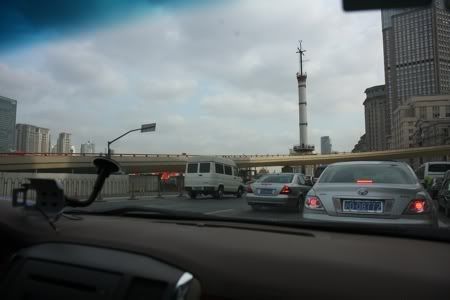
One little tip to share about Shanghai taxi: try not take any taxi with BX in the car plate.
Any car in Shanghai has a car plate, like this: 沪B-X1234 [...] if there is a car without these characters [U, V, W, M, N, X] on plate, and pretend to be a taxi, you will know it.
Among all these plate, X is very special.
X plate taxi are private taxi plate, while all the others are company owned taxi. A company owned taxi means the taxi is owned by a taxi company, and the driver is hired by the company to drive the car, and the driver needs to pay about 450 - 500 base fee to the company everyday. Their earning needs to pay this fee, gas fee, and all kinds of maintaince fee for the car before he can get a profit.
X plate taxis, or private taxis, are owned by individual persons, and they don't belong to a company, so they don't need to pay anything. Recently, they are required to join a company setup just for the management propose of private taxis. The management is as low as 150 RMB per month, v.s. 15,000 for other taxi drivers.
So the owner of an X plate taxi earns huge profit.
However, their service quality is the worst among all the taxis, just because they are not afraid of any customer complain at all - there is no company responsible for it. Their service standard is also pretty low. The rule of thumb (although with a little bit discrimination) is, if you feel very bad about a taxi driver, chances are, it is a X plate taxi...


In many areas of southern Nigeria where the Yoruba predominate, an "o" is added to the end of a word to add emphasis, a practice in the Yoruba language. Most noticeable is a shout of "Sorry-o!" to someone who trips or suffers another misfortune. -- via »IHTAn example sentence for Shanghai:
蒹葭苍苍,白露为霜。所谓伊人,在水一方。Those heady days of summer... Those alluring days of intellectual debates, of passionate belief in ideals, of heads buried in pillows and tears, of joints smoked in caravans, of hungrily devouring Barthes and Nietzsche and love alike.
溯洄从之,道阻且长。溯游从之,宛在水中央。**

 ___

 ___

 ___

Here in Japan, the light does not turn "green", it turns "blue"!
The Japanese word for green is "midori" (yes, of liqueur fame), and the word for blue is "ao", however, as I understand it (though I am no lexicographic historian), midori is a much younger word than ao. For reasons few seem able to articulate, Japanese historically had a somewhat limited verbal palette for the infinite variety of colors, though it is augmented by such natural constructions as "ha-iro" for "ash-color" (gray) or "mizu-iro" for the blue color of water.
Traffic signals are the same color as in the U.S. (a blue-green), but are universally referred to here as "ao-shingo" (blue light) (nothing to do with K-mart).
It's not just that they choose to label one ambiguous color as being on the other side of the line; "ao" simply has a broader meaning. Green tree frogs are "ao-gaeru", and one's youth may be referred to as "seishun" (blue spring).
I could go on about the colors of tea and others, but that's enough for now.
Also see: http://en.wikipedia.org/wiki/Distinguishing_blue_from_green_in_language
In 2001, getting into a Tokyo taxi for the first time, I remember being surprised by a number of things. The door opened before I could get a hand to it, the driver was wearing white gloves, puffing a cigarette, and when I got in, he didn't seem to have a clue where the Japanese address that I handed to him was. After a short interchange on the radio, with who I assume to have been HQ, he said 'OK' and drove me off to my destination leaving me generally rather impressed with the cleanliness and politeness of the experience.
Since that time, taking taxis in Japan has become a part of life that I spend little time dwelling on. However, there are some interesting facets to the business and culture of taking cabs here that have changed significantly in recent years. The most recent change is of course the smoking ban that has been imposed on most cabs in Tokyo this month. The two main taxi associations, The Tokyo Taxi Association and the Tokyo Kojin Taxi Association have implemented a ban covering 52,000 taxis out of the reported total of 53,619 cabs. The ban has not been extended nationally yet but will most probably be complete by the autumn. A breakthrough for the anti-smoking lobbyists, like all such regulation, the ban will rile smoking drivers and passengers and be met with applause by their non-smoking counterparts.
One thing is for sure, the trademark cigarette for cab drivers will rapidly become a thing of the past. However, while this might be referred to as 'regulation' the industry at large has been locked into a trend of deregulation for over 10 years. Before then, since the 1970s, the industry had faced major restrictions that in part resulted from the sudden surge in demand for cabs during the period of economic consolidation in the 1960s. The government was so concerned by issues such as taxis refusing customers for short distance trips that it brought in the Emergency Measures Law for Optimization of Taxi Services, in 1970.
Together with the existing 1951 Road Transport Law, this gave the government almost absolute control of fare prices, the number of taxis on the road, licenses granted, operating hours and allocated patches.
During the 1990s however, reformers came into power and started to deregulate across a specturm of sectors. A paper from the Kyoto Institute of Economic Research argues that the first manifestation of deregulation in the taxi industry occurred in July 1993 which allowed for a dual price structure in Osaka allowing most cabs to start from 600 yen but some from 540.
By the turn of the century, excessive demand had turned to an excess of supply; worried that the restrictions might fuel less than savory modes of competition, and also as Diet reformers initiated a more thorough general program of deregulation, the Road Transport Law was reformed in 2002 making it much easier for new firms to enter the market.
Taking advantage of the new legislation, many operators set up fleets and the number of taxis on the roads increased dramatically. Firms such as MK Taxi, kept their prices low and managed to grow their business substantially. Liberalization thus created more jobs and introduced more competition into the industry. However, much to the confusion of economists, the government's release of control over supply and demand has not exactly gone as planned. Firstly, although the supply levels have risen, demand has actually gone down. This has led to deteriorating conditions and pay decreases for drivers and apparently there has been a downturn in the level of service.
As a recent paper by Walter Skok and Sakoto Kobayashi (in Knowledge and Process Management) observes, the reforms were intended to 'improve service quality as a result of increased competition. However, the resulting situation is the opposite to that expected.' They continue: 'Although the number of cabs has steadily increased, the demand has correspondingly decreased. This paradoxical situation may be explained by the damaging effects of the recession that had an adverse impact on personal spending power.'
Others argue that it was also the result of 'excessive competition' in the industry as a consequence of deregulation. This explanation is possible but ignores the nature of the problems that regulation caused in the first place; attempts to control supply and demand can be futile in the face of oscillating consumer spending power and discourages sorely needed entrepreneurialism. But it is also arguable that the liberalization has not really gone far enough. In particular,prices are still controlled by the government and taxi companies had to fight hard for the right to rise to 710 yen in Tokyo, effective from last month. If the government allowed companies to control pricing, this would give firms more freedom to carve out budget or luxury niches. On the other hand, when it comes to prices, passengers tend to go for the first cab to stop rather than look out for the cheapest one. Companies such as Nihon Kotsu, one of the big three companies has got around this by introducing taxi ordering services that respond to one ring of a mobile phone.
The recent fare hike has had a mixed reaction and arguably favors the bigger companies. The Nikkei reported that the fare rise was driving customers away. This can put the squeeze on the smaller operators and it has been the case that the larger
companies have been acquiring increased numbers of their smaller competitors in the last few years. Smaller operators are the least likely to be able to keep fares low and even if they do, their fleets are too small to derive major benefit from this. Last July, Nihon Kotsu bought its smaller rival Toyo Kotsu, and lower down the food chain, several midsized firms have bought out smaller ones. In terms of labor too, big companies find it easier to get staff and therefore keep expanding - another
industry paradox is that despite a falling wage, demand for drivers has gone up with the increasing number of operations.
Perhaps further deregulation would allow for more independent operators and smaller companies who could sustain their business by providing a more tailored, targeted service-once the playing field is more level.





 2008年6月3日04点24分。
 2008年6月3日04点54分。


